
Design privacy around actual sharing patterns
Messenger privacy has several independent layers: who can open the installed app, what shows in notifications, who can access the Meta account, and how encrypted chat history is recovered. Changing one layer does not automatically change the others. This chapter addresses “Messenger privacy on shared Android devices” as an independent decision, with a safe test and a clearly stated limitation.
Decide the exact objective
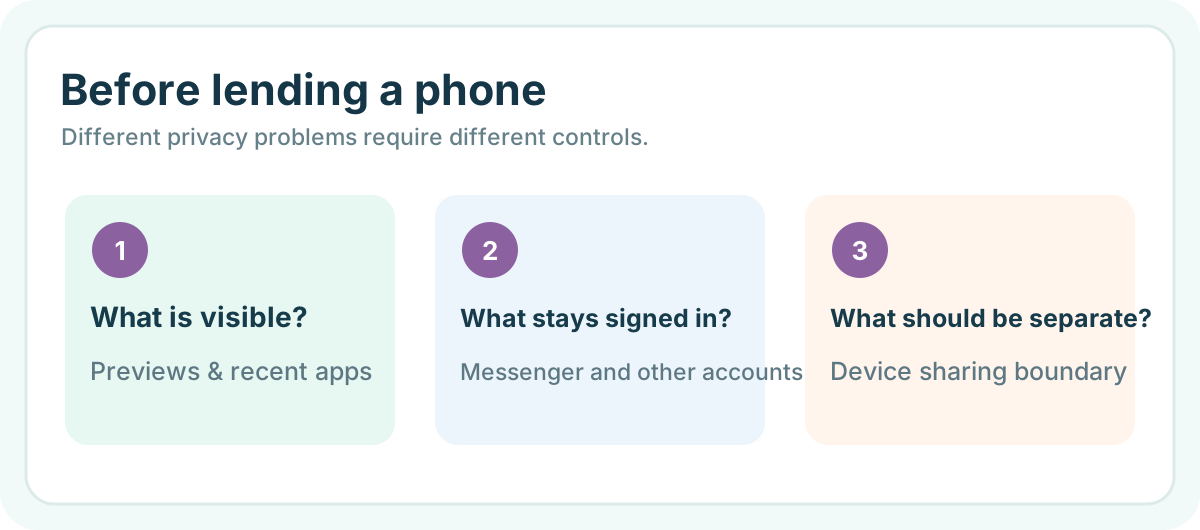
On a family phone or borrowed tablet, different people may know the primary device PIN. Establish whose accounts are signed in, whether multiple Android user profiles are supported, and whether notifications remain visible.

Test the real-world behavior
For a temporary handoff, use the least revealing device state; for a long-term shared device, consider supported separate accounts or profiles. Avoid saving the same Messenger account in a common browser and then treating mobile app lock as complete protection.
Record what the control cannot do
For this Messenger-specific step, check the account, app entry and encrypted-chat storage as separate things. If a step removes secure storage, consult Meta’s warning about permanent chat-history loss.
A borrowed-device checklist should also check Messenger sessions in any signed-in browser.
Practical implementation checklist
- Identify whether the target is app opening, notification text, account access or chat-history restoration.
- Use a harmless test Messenger conversation on a compatible Android device.
- Test the selected control in both locked and unlocked device states.
- Record limitations without deleting secure storage or promising automatic recovery.
Questions readers should resolve
Will app locking recover Messenger chat history?
No. It controls a local app-entry path; encrypted chat recovery is governed by Meta’s secure-storage process.
What should be tested first?
Use a non-sensitive sample on the exact recipient device and software version; document what works and what remains unsupported.
Research and documentation
These sources support the technical boundaries described here. They are not substitutes for testing the current software on the target device, checking legal requirements, or independently confirming product claims.
- Meta: Messenger encrypted messages and secure storage
- Android Private Space
- Android notification controls
Editorial note: No paid link placement is required for this guide. Product information, if mentioned, describes one possible tool and should not be read as an endorsement or an assertion of universal compatibility.